

From the Hanging Gardens, which were counted among the Seven Wonders of the Ancient World, to the maze gardens of the early modern period and up to the present day, the image of the garden has long captivated human imagination. Not only in the context of horticulture and physical labor, but as an idea. A place of ideals, reflecting a perfect relationship between humankind and nature. As different societies held different beliefs and celebrated different values in different eras, the idea of the garden also changed form, shaped by shifting visions of the Paradise people longed for.
The Garden of the Gods
From the earliest days of human civilization, gardens symbolized a primal connection between people and the divine. The concept of a garden planted by celestial beings and containing forbidden fruit is not unique to the Bible. It also appears in the Epic of Gilgamesh, where the hero attempts to enter a locked garden, and in Greek mythology, where one of Hercules’ labors is to pick a golden apple guarded by a dragon at the heart of a garden planted by nymphs. Often, the golden fruit or apple in the center of the garden is linked to eternal life or ancient wisdom found in the heavenly realm – strictly off limits for ordinary humans.
Perhaps it is not surprising that the idea of Paradise emerged in other cultures as well, since at that time, harnessing the powers of nature for human benefit was the great challenge facing early societies. From the agricultural revolution to the construction of the first cities, wild and unpredictable nature was a force people could not tame. The garden, which managed to express nature’s beauty while rendering it harmless and fruitful, was seen as a sublime creation. A symbol of technology and wisdom that could only have come from the gods.

Four Entered the Orchard
We are all familiar with the story of the Garden of Eden, of Adam and Eve, the serpent, and the forbidden fruit. But alongside the expulsion from Eden as a foundational myth of humanity, there is another story in the Babylonian Talmud, in Tractate Chagigah. It is one of the most enigmatic tales of all:
Four entered the orchard [pardes],
They are as follows: Ben Azzai; and ben Zoma; Aher, [the other] and Rabbi Akiva.
Rabbi Akiva said to them: When you reach pure marble stones, do not say: Water, water,
Because it is stated: “He who speaks falsehood shall not be established before My eyes” (Psalms 101:7).
Ben Azzai glimpsed and died.
And with regard to him the verse states: “Precious in the eyes of the Lord is the death of His pious ones” (Psalms 116:15).
Ben Zoma glimpsed and was harmed,
And with regard to him the verse states: “Have you found honey? Eat as much as is sufficient for you, lest you become full from it and vomit it” (Proverbs 25:16).
Aher chopped down the shoots.
Rabbi Akiva came out safely.
(Chagigah 14b, translation: The William Davidson Talmud (Koren – Steinsaltz), via Sefaria)
A number of traditional interpretations explain that this is not merely a tale of picking fruit in the local orchard, but of a spiritual journey into the higher realms and the dangers involved in seeking divine wisdom. Yet this is more than just a metaphor. The word pardes comes from Persian and means a garden or enclosed greenery. It later passed into Greek and then into many other European languages, eventually becoming the word “Paradise”. What is particularly striking is that the orchard story describes something like the reverse of the expulsion from Eden. Here, a group of four sets out to return to paradise, to the orchard. The Talmud’s cryptic language describes a journey and a search for Eden, for the wisdom hidden beyond its gates, and the dangers facing those who are not worthy of entering.

The Garden of Earthly Delights
The search for paradise found expression during the Abbasid dynasty (8th to 13th centuries CE) through the planting of magnificent, impressive gardens. These gardens were a way of bringing the heavenly paradise down to earth. They became an inseparable part of palace architecture in cities like Damascus, Baghdad, and Cordoba. The gardens featured fountains, arches, and columns, and served as venues for feasts and banquets that were often accompanied by poetry. This poetry included breathtakingly detailed descriptions of the gardens, the scent of the flowers, and the pools of water. Wine servers, male or female, were part of the sensual image of paradise, where desire, spirituality, and wisdom were intertwined.
Surprisingly, and despite the explicit prohibition against alcohol in the Quran, wine was a part of pre-Islamic culture and at times flowed like water in palaces and gardens, regardless of the religious ban. It quickly became a poetic metaphor that did not necessarily represent real events, but served as an expression of love for God, religious ecstasy, and at times also individualism and criticism of religious puritanism and strictness.
This influence was evident in the poetry of the Jewish Golden Age in Spain, a time when Hebrew poets drew inspiration from Islamic poetic traditions. For Jews, there was no halakhic ban on drinking wine, so wine songs were even more widely accepted. However, there too, elements of feasting and the garden were used to express yearning for God and to describe the sensual aspect of religious transcendence. In the case of Jewish poetry, the garden poems often included biblical imagery, especially inspired by the Song of Songs, which is rich in descriptions of nature and gardens. The Song of Songs also features the fusion of nature and love, and a metaphorical dimension that shifts the emotional passion between lovers to the relationship between the believer (or the nation) and God.
A Locked Garden
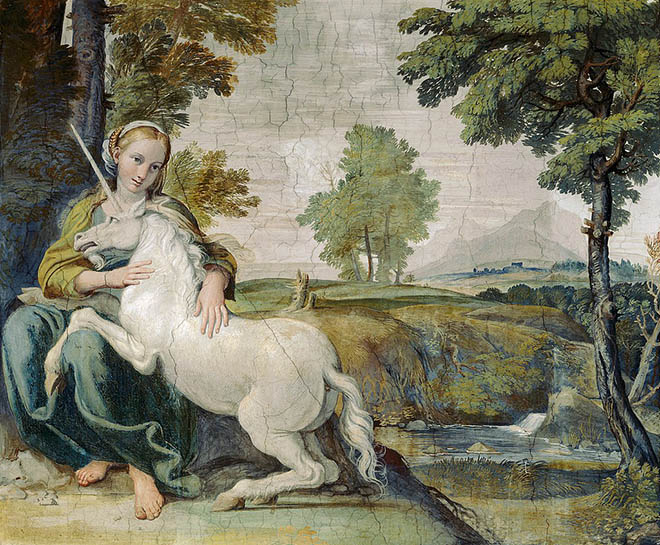
In Christian interpretations of the Bible during the Middle Ages, the verse “My sister, my bride, you are a locked garden – a locked garden and a sealed spring” (Song of Songs 4:12) became a key turning point in the reimagining of the garden motif. The garden came to symbolize innocence and virginity, not only drawing on the image of the Garden of Eden before the sin, but also as a metaphor for the Virgin Mary, who remained untouched despite the miraculous conception and birth of Jesus.
In art, unicorns were depicted within gardens, for example in the “Unicorn in the Garden” tapestry series. The captive unicorn enclosed within the walled garden symbolized, in allegorical Christian interpretation, Jesus in the womb of the Virgin. This emphasized the garden as a sacred, pure, and protected space, inaccessible to all, preserved for divine revelation. It echoed the primordial Garden of Eden, but this time it was transposed onto the female body.
Following encounters between Christianity and Islam, particularly in places like Italy and Spain, a culture of monastic garden cultivation emerged. There too, the image of the walled, enclosed garden carried the same metaphors of a return to simplicity and purity.
A Pastoral Paradise, Free of Smog
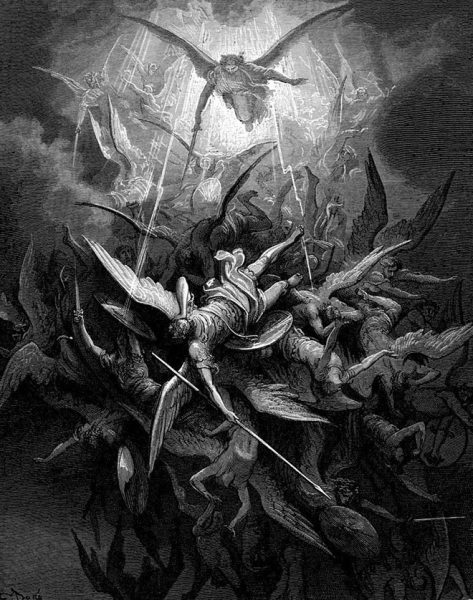
With the rise of industrialization and the beginning of the modern era, cities became noisier, smokier, and more polluted. The divide between nature and the urban environment grew wider. At the same time, the garden began to take on new and different meanings, set in contrast to the industrial city and the factory.
The symbolism of innocence and virginity now highlighted a return to the purity of childhood. The very idea of childhood did not exist for most of human history, but in the Victorian era, it emerged along with the imagery of childlike innocence in paradise, as a space protected from evil and injustice, with the child wrapped in the garden as if in a womb. All of this came before the “sin” of sexual maturity, when the child would be cast out into the urban, industrial, cruel, and dirty environment.
Come Into My Garden
The image of the garden, whether enclosed by a wall or open to all, has been a recurring motif that has shifted in form and meaning throughout history, reflecting changing relationships between humans, nature, and the city. But it also echoes a deeper longing for peaceful, nurturing spaces that embody our most primal understanding of existence: that we were meant to live in paradise, before sin, before toil and hardship, before the suffering of human life. Across all interpretations, one thing is clear: blossoms, nature, leafy foliage, and the vivid hues of flower petals have brought us joy, serenity, and happiness for thousands of years.
A new exhibition is now on display at the National Library of Israel. Flowers: Leafing Through the Collections of the National Library tells the story of wildflowers in Israeli culture and in the Land of Israel. The exhibition will feature rare items on public display for the first time, alongside new artworks created specifically for the occasion.
Among the items on display are selections from the archive of Baruch Chizik – a polymath, agronomist, and botanist who worked in the Land of Israel in the first half of the 20th century. In his work, Chizik often drew on myths of gardens. His first book, Agadot Tzamhi’el, published in 1930, is a collection of stories that blends midrash, historical and scientific facts, and biblical tales about the flora of the Land of Israel.

Chizik’s magnum opus was Otzar HaTzmaḥim (The Treasury of Plants) – a Hebrew book and field guide that sought to describe and identify every plant in the Land of Israel, trace their histories, identify those mentioned in the Bible, and propose Hebrew names for various species. He is also credited with coining the term Eden as a word to be used in modern Hebrew to describe a particular kind of garden in the Land of Israel, within the framework of his book Arrangement of Eden and Guidelines for Artistic Gardening; The Wilderness and the Garden: Planting and Care of Gardens.
You can find more information on the exhibition, and book tickets, here.