
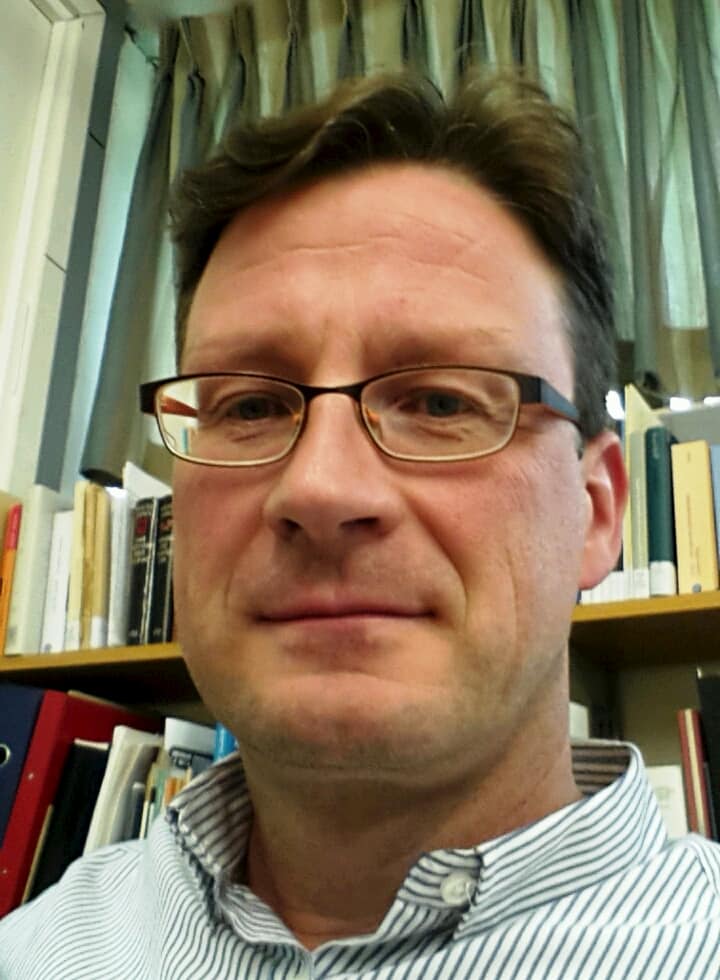
“It is impossible to define anti-Semitic activity as a prank. It is directed not only against the Jewish citizens who live with us, but against the basic rights of our country. What is called for is not punishment, but education!”

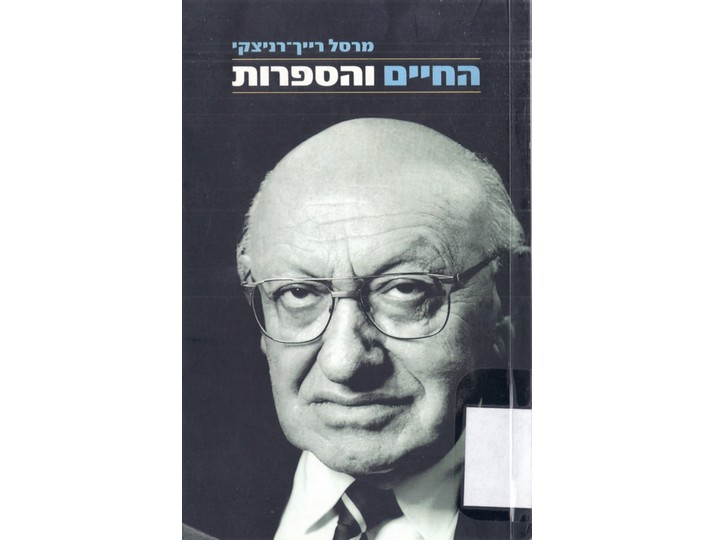
Marcel Reich-Ranicki and the German Literature
Reich-Ranicki (1920-2013), a Polish-born Jew and Holocaust survivor, was the preeminent authority in modern literary criticism in Germany

David Ben Gurion Meets Conrad Adenauer in New York, 1960
At the beginning of 1960, Israeli and West German leaders decided that it was time for a certain détente. This took the form of an official meeting between the two head statesmen: David Ben Gurion and Konrad Adenauer

Postcard from Curt David Wormann to Felix Weltsch, 1955
Who was Curt Wormann? What was he doing in Germany just ten years after the end of the war? And who was Felix Weltsch?
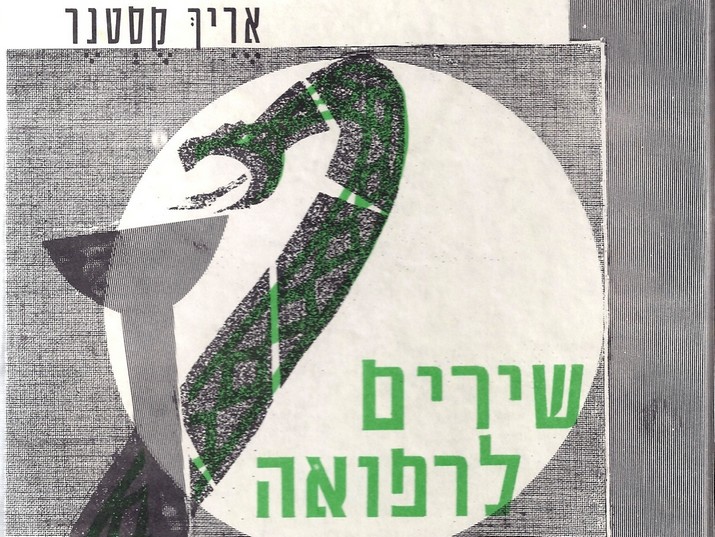
Erich Kästner’s Poems in Hebrew, 1965
Kästner sympathized with the Zionist idea and even visited Israel a number of times. Some of his books were translated into Hebrew already in the 1930s
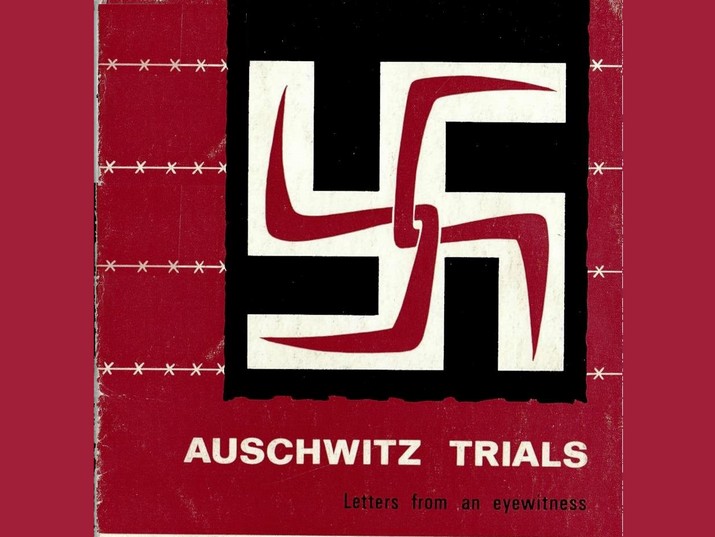
First Auschwitz Trial in Germany, 1963-1965
In keeping with the legal interpretation accepted at the time in Germany, there was a statue of limitations on every act of Nazis against Jews and against people with anti-Nazi views, with the exception of murder. Through these documents, it was possible to connect concrete murder cases with concrete people, enabling a legal investigation against the perpetrators.

Letter of the Author Moshe Yaakov Ben Gavriel to His Friend in Germany regarding the Future German Ambassador to Israel, 1963
Among the letters preserved in his personal archive in the National Library one can find correspondences with individuals in Germany discussing the question of establishing diplomatic relations between the two countries

The Author Moshe Yaakov Ben Gavriel and the Red Army Faction Activist Gudrun Ensslin
During those years, an underground organization of activists from the radical German left was established, which operated against the West German government by carrying out a long series of terrorist acts, kidnappings, hijackings and robberies
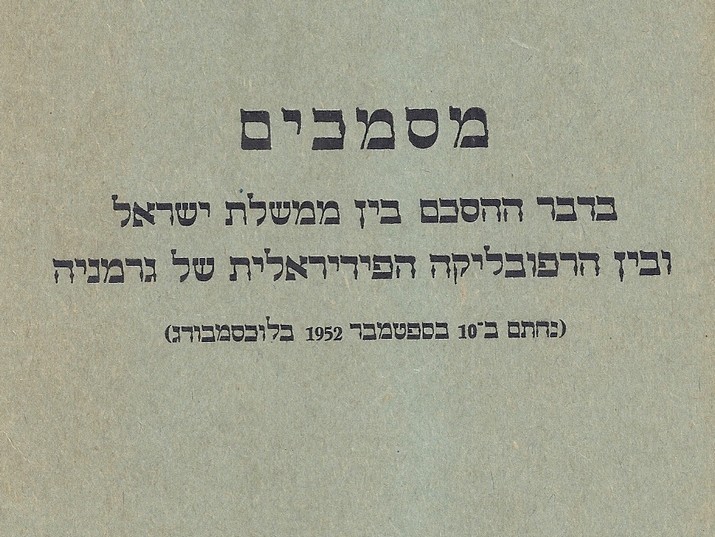
The Reparations Agreement of 1952 and the response in Israel
Not only did many German citizens have reservations about the agreement-in-process. Considerable portions of the Israeli public were also unprepared to accept neither the very concept of negotiations with Germany nor the funds from the “land of the murderers,” which was defined by opponents as “blood money.”
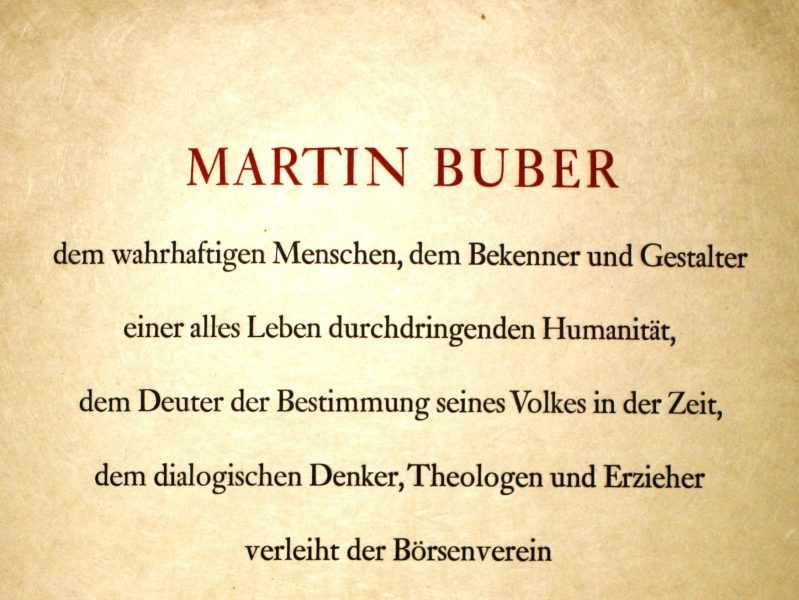
Peace Prize of the German Book Trade Awarded to Martin Buber, 1953
Buber’s winning the prize made many waves in the German media, and it can be assumed that the event was a paving stone in the path to the establishment of official relations between West Germany and Israel