

German immigrants to Israel from the “fifth Aliyah” often carried volumes of Goethe’s works with them to Israel, in the attempt to retain something from their lost homeland, at least, at the cultural-linguistic level
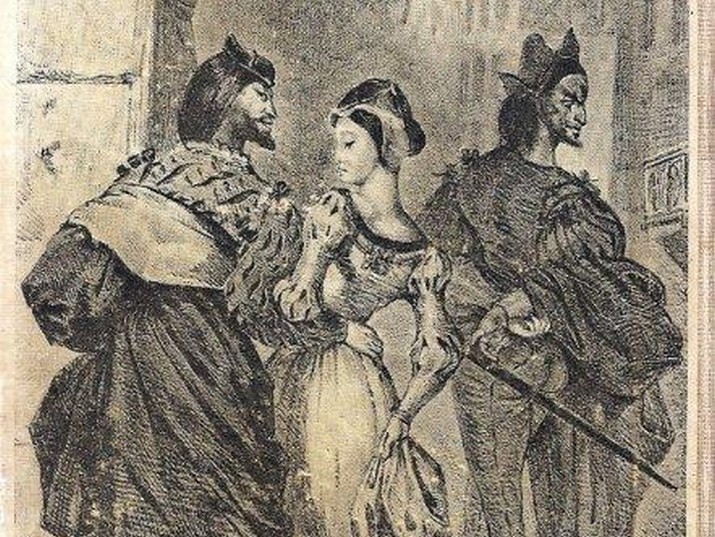

The “Degenerate Art” Exhibit, 1937
Every work of art that did not conform to the Nazi definitions was declared “degenerate art” (Entartete Kunst), art that in the opinion of the German rulers from 1933-1945 was not art, but rather a scribble that was mocking of the German people
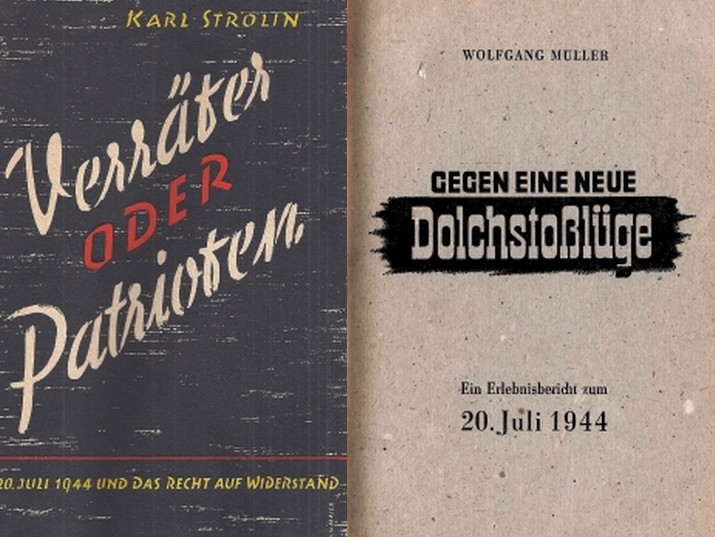
German Opposition to Hitler and the Assassination Attempt of July 20, 1944
The apathy of substantial parts of German citizenry, together with the entrenched obedience to the authorities and the hope of improving the standard of living meant that there were almost no people who were willing to endanger themselves in opposition activities against the regime

The Nuremberg Laws
The Nuremberg Laws remained in effect until the end of the Third Reich, and were also implemented in Austria after it joined Germany in 1938, as well as in all of the territories occupied by Germany during WWII

German Literature Abroad and Dutch Publisher Allert de Lange
Many authors sought political asylum and a place that would enable them to create in their genre

The Book That Survived Kristallnacht and Made It to the Land of Israel
A battered copy of “In the Heart of the Seas,” rescued from anti-Semitic riots in Germany, was returned to its author, S.Y. Agnon, with a letter telling the incredible story of its survival
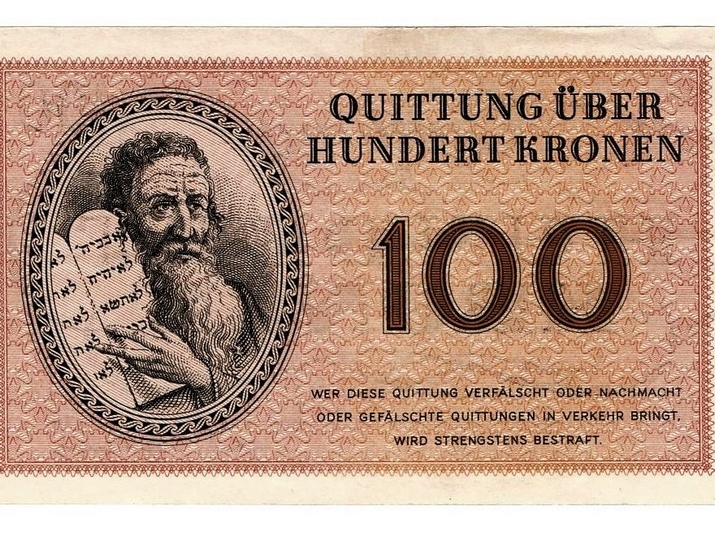
These Currency Bills Were Used in the Theresienstadt Ghetto
The alternative currencies set up by the Nazis in ghettos and concentration camps across Europe served to establish a false sense of “normalcy”.

Else Lasker-Schüler’s Drawing: “The Banished Poet”
Since 1974, Lasker-Schüler’s artistic estate has been preserved at the National Library of Israel

Divided Germany, relations with Israel and the reunification of Germany
The partitioning of Germany into occupied areas was, in effect, the beginning of the political division of the state which endured until 1989. Each of the Allied powers advanced its interests in the area under its control

Letter of First German Ambassador, Rolf Pauls, to Chava Steinitz (Buber)
Some of the Israeli public opposed the establishment of relations