

“At the point where the valley began its soft slope towards the mountains, stood a snowed-up house. It looked very lonely and rather like a crazy drift of snow. Quite near it ran a bend of the river, coal black between ice-edges. The current kept the stream open all winter. But there were no tracks leading over the bridge, and no one had touched the snowdrifts around the house.
Inside, the house was warm and cosy. Heaps of peat were quietly smouldering in the central-heating stove down in the cellar. The moon looked in sometimes at the drawing-room window, lighting on the white winter covers of the chairs and on the cut-glass chandelier in its white gauze bag. And in the drawing-room also, grouped around the biggest porcelain stove of the house, the Moomin family lay sleeping their long winter sleep.” –Moominland Midwinter, by Tove Jansson

Tove Jansson was famous for creating a literary universe of Moomintrolls, a “secondary world” that today would classify her books as children’s fantasy. But when the sharp-witted, imaginative young Jansson first breathed life into the plump, white creatures that would become legendary, the world around her was sinking into darkness. So, in a sense, the Moomintrolls embodied a refuge she built for herself and the woman she loved – a sanctuary from everything beyond.
Tove Marika Jansson was born and raised in Finland, in a home overflowing with art at all different stages of creation. Her father was a respected sculptor whose works filled the family house, while her mother was a graphic artist and illustrator.
Jansson’s own artistic talent was evident from an early age, and her parents did everything they could to encourage it. Even as a teenager, her drawings were already being published in the magazine where her mother worked. At the same time, she pursued artistic training wherever she could find it. She began her studies in Finland, but once she had exhausted the opportunities available in her remote northern homeland, she continued her education abroad. She studied in Berlin, Paris, and Italy, immersing herself in the artistic currents of Europe. When she returned to Finland, her work was exhibited in galleries and exhibitions, earning her critical recognition and a number of awards.

Tove Jansson had always been a humanist and a liberal. When Finland aligned itself with Germany before and during World War II, she did not hesitate to publish sharp, biting cartoons aimed at Hitler and Nazism. Nor did she spare Stalin, who threatened her hometown from the east, or the Finnish government, which she believed was on the wrong side of history.
It was in these political cartoons that the foundations of her most famous creation were first laid. At the bottom of each drawing, alongside her signature, Jansson would add a tiny sketch of a strange little creature she referred to simply as a “troll” – a round-bodied figure with comically exaggerated proportions.
In time, that creature would acquire a new name: Moomintroll.
During the war itself, as darkness spread across Europe and she felt trapped by the long Finnish winter, Jansson experienced a burst of creativity unlike anything she had known before. She sat down with a pencil and a blank sheet of paper. But instead of drawing, she found herself doing something else.
“At first I thought I would draw on the page in front of me,” Jansson later told Uriel Ofek, the first translator of her work into Hebrew. “But suddenly a different kind of inspiration came over me, a feeling I had never experienced before: a desire to write.” She reflected that her hand absentmindedly sketched the tiny, lovable Moomintroll she had drawn so many times before. “Then, as I looked at him, I exclaimed aloud: ‘I’ve found it! You, my little Moomintroll, will be the hero of my story.’”
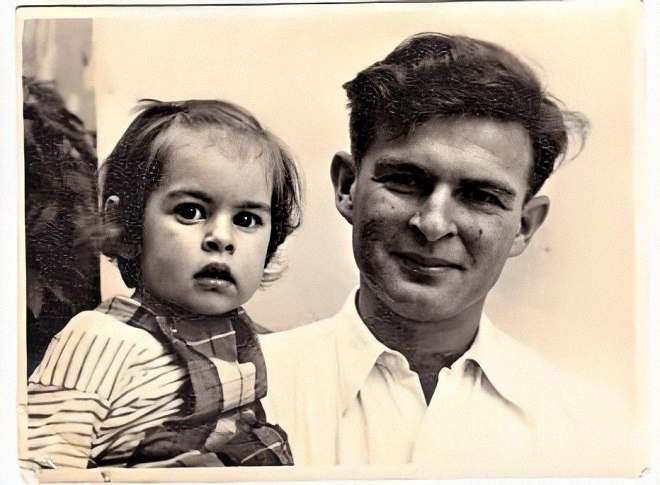
Shortly after the end of the war, Jansson published the first story set in Moominvalley: The Moomins and the Great Flood. It was the first installment or, as some have argued, a prequel in the series of adventures that would go on to capture the hearts of millions of readers, and later viewers, around the world.
The Moomin books quickly made Tove Jansson the most widely read Finnish author in the world.
She later created a Moomin comic strip for a British newspaper, and before long the gentle, peculiar white creatures took on a life far beyond the pages of her books. They appeared in television adaptations produced in Japan (the version most readers would know) as well as in Poland and Sweden; they inspired works of art, exhibitions, museums, and an endless array of merchandise; they even served as the basis for an opera.
Her success brought her financial independence. But it did not grant her complete freedom to be herself in the eyes of the world. Her private life, and especially her romantic relationships, often remained hidden behind closed doors.
She had good reason to keep them there.
Although she grew up in a remarkably accepting environment, at least by the standards of her generation, her relationships were often viewed as unconventional.
Her first great love was the painter, Sam Vanni. He belonged to the right profession, but not to the right background as he was Jewish. Their relationship began as a close friendship. Vanni then became her mentor, and eventually her lover. The two painted one another’s portraits, and Jansson later said in interviews that she learned more about the essentials of painting from him than from anyone else in her life.
Her father would not accept him as a prospective son-in-law. Yet Jansson and Vanni achieved something that countless couples before and after them failed to do. When their romance ended, it evolved into a deep and lasting friendship that endured for the rest of their lives.

While writing the first Moomin stories, Jansson shared her life with Atos Wirtanen, a journalist, philosopher, author, and left-wing politician who would become the inspiration for Snufkin, the fiercely independent wanderer and closest friend of the Moomins.
Their relationship left its mark on both their lives and their work. Jansson created a character inspired by Wirtanen in the Moomin books, while Wirtanen published her earliest comic strips in his newspaper. The two even exchanged marriage proposals. Jansson herself made the first move, a rather scandalous act at the time. Yet after several separations and reconciliations, the relationship came to an end without either a civil or religious wedding ever taking place.
Then, in November 1946, Jansson’s love life took an unexpected turn. For the first time, she fell in love with a woman.
Vivica Bandler was a theater director, and the relationship between the two women was brief, intense, and transformative. It was also an affair in every sense of the word. Jansson was still involved with Wirtanen, while Bandler was married.
Beyond the personal complications, their relationship carried real risks that would accompany Jansson for the rest of her life. Same-sex relationships were illegal in Finland, and the conservative society surrounding them was far from accepting of such a partnership.
Unable to declare their love openly, Jansson turned to another world – the one she had created herself. In the world of the Moomins, home is a warm and welcoming refuge from the cold outside world. It is a place where Jansson made the rules. And there, she found a way to tell her story.
In Finn Family Moomintroll appear the characters Thingumy and Bob, known in the original Swedish as Tofslan and Vifslan, which were the affectionate nicknames Jansson and Bandler used for one another.
The two characters speak a private language that others struggle to understand. They are inseparable, and they carry with them a mysterious suitcase containing a magnificent ruby.
It doesn’t take much literary detective work to see the symbolism. The ruby can be read as a reflection of their love – something precious that must be concealed from the world, existing beyond social conventions, legal prohibitions, and public condemnation.
A few years later, the romance between Jansson and Bandler faded. Their friendship did not. The two remained close friends and professional collaborators, working together to bring the Moomins to the stage and, later, to television.
And then Tooti arrived.
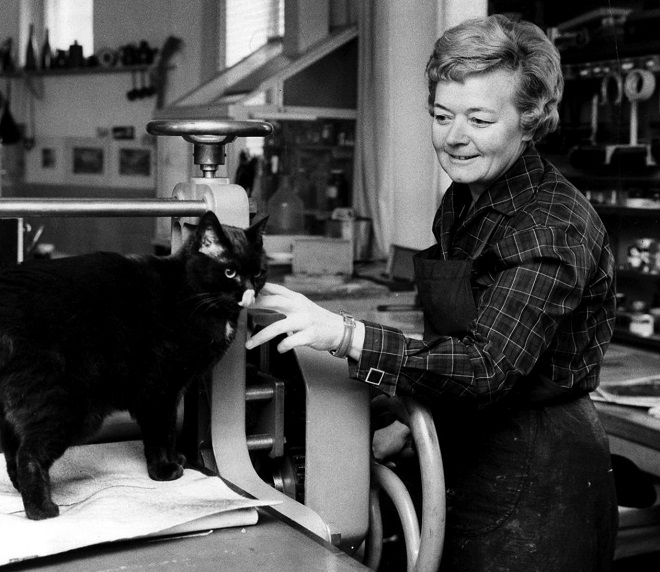
If Jansson’s earlier relationships with women had been, in some sense, meaningful but tentative explorations, the situation was now entirely different. She felt she had found her true life partner. And this love would endure for as long as they both lived.
Jansson met Tulikki Pietilä, known to friends and family as “Tooti,” at a Christmas party hosted by the Helsinki Artists’ Association in the mid-1950s. The two found themselves standing by a gramophone, each holding a record she hoped to play.
The encounter ended with them sharing rather more than music. Before long, they were living together, or, at least as close to together as circumstances allowed. Each maintained her own studio apartment in the same building, and a passage through the attic enabled them to visit one another discreetly.
Summer was the season when they could afford themselves a little more freedom. They spent it on the tiny island of Klovharun. At first, they stayed in a tent; later, they built a small cabin of their own. There they worked, sat in companionable silence, swam in the sea, fished, painted, and wrote.
The island was beautiful and remote. It had neither running water nor electricity, but it also offered something equally valuable – distance from a society that still frowned upon two women openly holding hands in public.
Pietilä was an important artist in her own right, though Jansson’s international fame sometimes overshadowed her achievements. The two women profoundly influenced one another’s work and collaborated on a number of creative projects, including Notes from an Island, Jansson’s 1966 book inspired by their life together in the archipelago.
Although she could not even come to her parents’ holiday table arm in arm with the woman she loved, Jansson nevertheless succeeded in creating a world of her own. It was a life lived not in fear or concealment, but as an independent woman whose days were filled with love, work, creativity, and travel.

In her later years, Jansson grew somewhat weary of the Moomins. She resented the way they overshadowed the rest of her work including her paintings and the books she wrote for adults. For alongside the Moomin stories, Jansson also produced a substantial body of adult fiction, including two of her best-known works: The Sculptor’s Daughter (1968) and The Summer Book (1972).
She was celebrated in Finland and far beyond it, earning admiration wherever her works were read. Among many honors, she received the Hans Christian Andersen Medal – the world’s most prestigious award for children’s literature, sometimes referred to as the “Little Nobel Prize.” Since 2020, her birthday has also been observed as an official Flag Day in Finland.
Tove Jansson died in her hometown of Helsinki on June 27, 2001, at the age of eighty-seven. Pietilä lived for another eight years without her beloved companion, passing away peacefully in her Helsinki home in 2009.
Today, Jansson is often viewed through a modern lens as a queer icon. Yet the reality was more complicated. She never set out to wage war against a society that, on the one hand, showered her with admiration, while on the other could have subjected her to criminal consequences had she openly declared the great love of her life.
Like Moomintroll in Moominland Midwinter, who does not battle the snow but instead learns how to live with it, Jansson simply did the best she could to create a good life for herself. Even if that required profound compromises and meant building something close to an alternate reality, a world in which she could live more freely than the one outside her door allowed.
“I think about the aurora borealis,” says Too-ticky, Jansson’s literary reflection of Tooti in that same winter tale. “You can’t tell if it really does exist or if it looks like existing. All things are so very uncertain, and that’s what makes me feel reassured.”