
August 1942. It’s hot in the Polish resort town of Otwock.
But today, the blazing sun is not warming up crowds of wealthy holiday-goers. Instead, it beats down on thousands of the town’s Jews who are gathered in an open square beneath the sky, exposed to the relentless heat without food or water as they wait for the trains that will take them to Auschwitz and Treblinka.
Gitl Blecherovitz sits beside her mother, who holds her close but looks terribly distressed. Gitl has just now made a choice – she could have escaped, but instead she decided to remain with her family.
Her only hope, Gitl’s mother says through the pain and despair, is that at least one member of the family will survive, that someone remain to preserve the memory of who they were.
Two family members are missing from this scene of fear and confusion – Yehuda Leib, the firstborn son, who managed to evade the deportation, and Yaakov Yehoshua, the third child in the family, who immigrated to Palestine before the war.
Eighty-three years later, three books written by members of the Blecherovitz family sit on the shelves of the National Library of Israel in Jerusalem. One was written before the war. The other two were written many years afterward – by the son and daughter who survived.
So how did we uncover the family’s story and the connection between the siblings, all through a peculiar signature found in a single book? To answer that question, we need to go back several decades.

The Diaspora Treasures Project
About a year after the end of World War II, Professor Gershom Scholem, one of the world’s foremost scholars of Kabbalah and then head of the Institute of Jewish Studies, along with Abraham Yaari, a leading expert on the history of the Hebrew book and a librarian at the Jewish National and University Library in Jerusalem (the predecessor of today’s National Library of Israel), traveled to Europe.
They were acting on behalf of the Diaspora Treasures Committee, an initiative established already in the midst of the war to locate, recover, and preserve Jewish books looted by the Nazis across Europe.
A large share of the books rescued through this effort eventually came through the National Library. At the height of the project, the Library likely held hundreds of thousands of such volumes, and tens of thousands remain in its collections to this day.
In recent years, the Library has undertaken an ongoing effort to identify these books, catalog them, and, whenever possible, document the stories of their authors and former owners – most of whom perished in the Holocaust.

An Old Technique for Preventing Literary Theft
As part of this project, we encountered something that at first seemed rather curious.
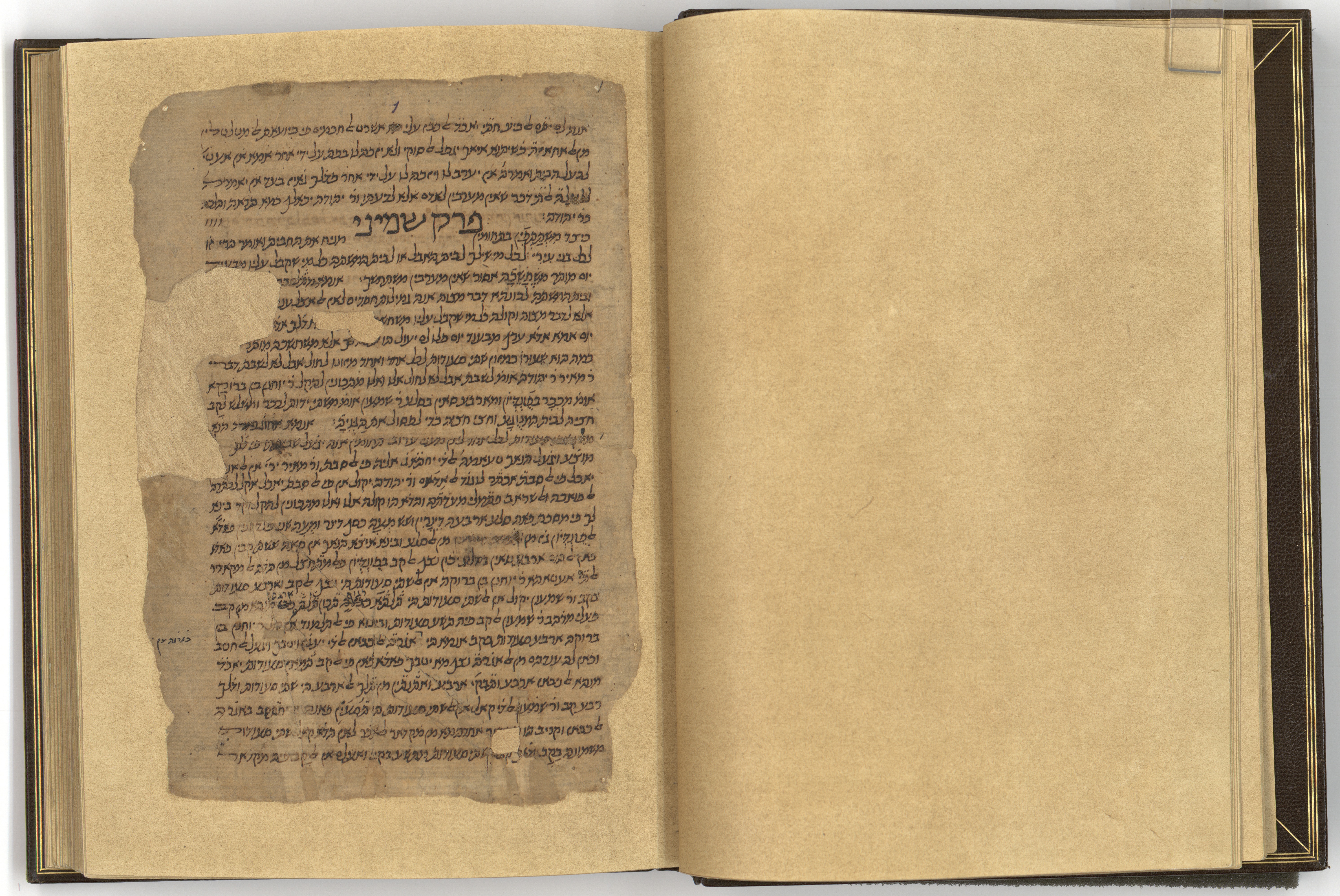
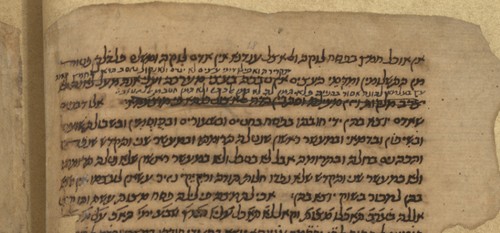
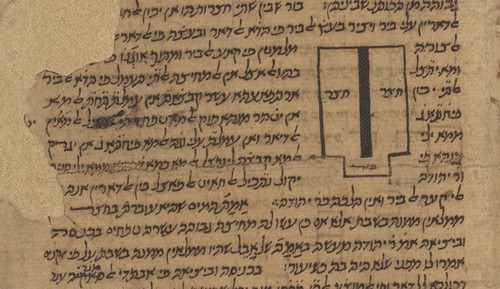
In one of the books identified as part of the Diaspora Treasures collection – a volume entitled Ziknei Machane Yehuda, containing brief Torah insights compiled by its author, Yehuda Aryeh Leib Blecherovitz – there appeared an ink stamp at the bottom of the title page:
“Yehuda Aryeh Leib Blecherovitz, author of Ziknei Machane Yehuda.”
This same Blecherovitz was Gitl’s brother. The book had been written and published before the Holocaust, but the author himself did not survive the Nazi terror.
The stamp had been applied by hand to this particular copy after it was printed. In addition, the reverse side of the title page bears the author’s personal handwritten signature.
At first, we assumed this had been the author’s own copy. But then we found two more copies of the book. And in both of them, the very same stamp and the very same signature appeared on the title page.

In fact, the explanation for this unusual feature appears in print at the bottom of the page itself:
“Any copy of this book that does not bear my seal [the stamp – per Daniel Lipson] and my handwritten signature, has come into the seller’s possession unlawfully [i.e., the book was obtained illegally – D.L.], and it is forbidden to purchase it.”
In other words, the stamp and signature were intended to protect the author’s rights against literary piracy. Any copy lacking both the stamp and the signature was presumed to have been stolen and printed without authorization, and readers were warned not to purchase it.
Literary theft – or plagiarism – is hardly a modern phenomenon.
Ever since people began producing original ideas, whether in scholarship, literature, or any other field, others have sought to claim those ideas as their own. In earlier times, copying a text or appropriating someone else’s work was often far easier than it is today. The practice remains with us, though modern plagiarists face far greater challenges – and a much greater chance of being caught.

But in the case of Ziknei Machane Yehuda, the stamp was not intended to guard against literary theft in the usual sense. Yehuda Aryeh Leib Blecherovitz was not worried that someone would take his work, replace his name with another author’s, and republish it under a false identity. His primary concern was something else entirely: the printing house itself.
In a business arrangement not all that different from those used today, an author who wished to publish a book would agree with a printer on a price for producing a specified number of copies. But once the presses were running, the printer could secretly produce additional copies beyond the agreed quantity and sell them without the author’s knowledge. In such a case, the profits would flow not to the rightful owner of the work, but to the printer.
To prevent this, Yehuda Aryeh Leib Blecherovitz added his personal stamp and signature to each authorized copy, certifying that the book had been distributed with his approval.
The author of Ziknei Machane Yehuda did not invent this method.

One of the earliest known examples of this practice in Hebrew printing appears in a book by Shlomo Min HaAdumim – better known by his Italian name, Salomone Rossi.
Rossi was an Italian composer and musician who worked at the court of the Duchy of Mantua. In addition to his secular compositions, he wrote music for synagogue services and published it in a volume titled Ha-Shirim Asher Li-Shlomo (The Songs of Solomon), which appeared in Venice in 1623.
The rabbinic endorsements printed at the beginning of the book include a declaration forbidding the purchase of copies sold without the author’s permission. They state that the author should place upon each copy “some distinguishing mark” indicating that he had approved its sale by a particular vendor. Unfortunately, the copies of the book preserved at the National Library of Israel do not bear such marks showing they were sold without the author’s approval.
Another example appears in a Hebrew Bible printed in Amsterdam in 1705. The Bible was issued in several volumes, and the National Library’s copy contains a warning forbidding the purchase of any copy that does not bear the signature of the proofreader, David Nunes Torres:
“And it shall be under a ban [i.e., forbidden under oath – D.L.] to anyone who acquires such a copy [D.L.].” In this case, the volumes preserved at the National Library do indeed bear both the stamp and signature of David Nunes Torres, indicating that it was an approved sale.

The Story of the Blecherovitz Family
The unusual signature piqued our curiosity. Who was Yehuda Leib, the author of this book? And what, if anything, did we know about his life and family? Answering those questions required a bit of detective work.
In 1983, a book titled Tiferet Yehoshua on Pirkei Avot was published by Rabbi Yaakov Yehoshua Blecherovitz. The author dedicated the volume to his family from the town of Otwock, near Warsaw, who were murdered in the Holocaust. He lists his parents, brothers, and sisters – among them Yehuda Aryeh Leib, the author of Ziknei Machane Yehuda. Yaakov Yehoshua Blecherovitz also notes that, apart from himself, only one member of the family survived: his sister Gitl.
Many Holocaust survivors chose to preserve their personal stories in written form. Now that we had discovered the sister’s married name, we searched the National Library catalog. Had Gitl Zilberberg written anything herself?
It turned out that she had. The title she chose for her book was: Mother, Your Wish Came True.

In her book, Gitl recounts how, in August 1942, all the Jews of Otwock were driven out of the ghetto and gathered in a large open area prepared beside the railway tracks. She sat there with her sisters and parents for long hours beneath the scorching summer sun, without food or water.
At one point, the Germans offered freedom to the young women in exchange for gold. To her mother’s dismay, Gitl chose not to save herself. Instead, she remained with her family.
Her mother lamented the decision aloud. She told her daughter that she hoped at least one member of the family would survive – to carry on after the horrors were over. Her mother never lived to know it, but Gitl did survive.
On the train to Treblinka, Gitl witnessed the deaths of her mother and younger sister, who were trampled by the other passengers crowded inside. Shortly after, Gitl cut through the wire that covered a narrow opening in the carriage and jumped from the train.
After enduring years of hardship, she eventually immigrated to Israel, where she married Yosef Zilberberg and raised a family. Many years later, she wrote a book about her family’s fate and gave it the title her mother never had the chance to hear. Mother, Your Wish Came True.
Gitl notes in the book that her eldest brother, Yehuda Aryeh Leib – the same Yehuda Aryeh Leib whose name appears on the title page of Ziknei Machane Yehuda – was not with the family at the railway station that day.
He had gone into hiding in Otwock, but was eventually discovered, murdered, and buried in a mass grave. All that remained of him were the book he had written and the signature he had left inside it.
Ziknei Machane Yehuda was published by Yehuda Aryeh Leib only a few months before the outbreak of World War II. The copies preserved at the National Library arrived in Jerusalem after the war as part of a larger shipment of books recovered from Europe.
This book led to the discovery of the writing of the other brother, Yaakov Yehoshua, who had immigrated to Palestine before the war. And Yaakov Yehoshua’s book, Tiferet Yehoshua on Pirkei Avot, published in 1983, was what led us to Gitl’s memoir.
And so, because there were people who took it upon themselves to collect these books, bring them to Israel, preserve and catalog them, we were able to piece together forgotten fragments of the lives of Jewish families, like this one, whose stories might otherwise have vanished.
In many cases, the books they wrote achieved something their authors did not. They survived.