

Air raid sirens wail, the terrible sound rising and falling through air still heavy with dust, and the smell of fire from a building struck only hours before. Women run through streets filled with rubble, clutching babies and terrified children as they search for the nearest shelter, perhaps regretting that they didn’t spend the night below ground in the subway tunnels.
This is not Tel Aviv in 2025. It is London, in the year 1940.

A decade later, with some of those ruins still visible, the first book – in what would become one of the world’s most beloved and successful fantasy series – was published: The Lion, the Witch and the Wardrobe, the opening volume of The Chronicles of Narnia.
Seventy-five years later, in a different country, in a far-off part of the world, a military operation would be named after this very series: “Operation Narnia.”
So what is the connection between the Narnia books and the war that erupted in 2025 between Israel and the Islamic Republic of Iran? It’s more than just the name of the operation that targeted Iran’s nuclear scientists at the war’s outset. The link runs much deeper, rooted in the very reasons this series was written in the first place.

In 1940–1941, as Nazi Germany bombed London almost nightly, and sirens, shelters, and explosions became part of daily life, anxious British parents sent their children far from the city to quieter, distant villages. Most families had no relatives in the countryside, so children were placed with strangers who opened their homes and hearts to kids who had been living in constant fear, deprived of sleep, and facing countless hardships in a city bombarded almost every night without pause.
One of these country homes was the spacious and well-kept house of the widowed Mrs. Moore in Oxford, which welcomed three London girls: Margaret, Mary, and Katherine.

Mrs. Moore had lost her only son in World War I, but she was not alone in her large house. One of her son’s closest friends was Clive Staples Lewis, professor of medieval literature at Oxford – better known by his initials, C.S. Lewis. After Lewis lost his parents, Mrs. Moore took him and his brother into her home, giving them the care she could no longer offer her own lost child.
Into this warm and unconventional household came Margaret, Mary, and Katherine, sent by their parents to escape the terror of the bombings. Years later, Margaret fondly recalled those days in the old Oxford house with the kindly professor who treated them with great warmth, and even helped them with their schoolwork.
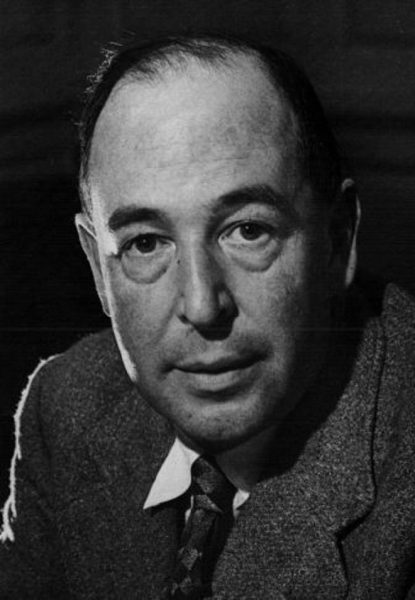
Mrs. Moore, generous and warm-hearted, treated Lewis with great kindness but ran her home according to the strict values of the Victorian era. The girls, for example, were not allowed to join the adults for dinner. Each evening, the distinguished professor, whose room was just below their window, would secretly send them plates of food. Sometimes they would sneak through that window into his room, where he would play them one of his many records.
Margaret remembered him as a courteous, pleasant man, unpretentious despite his high position at the university, and deeply humane. He was a gifted storyteller, and he would entertain them with fairy tales and stories while they sat together in the garden or walked in the nearby woods.
They knew that away from the house, and especially on the grounds of the university, he was a respected and prominent figure. But he treated them as equals and even took them to meet some of his fellow professors.
Early in his university career, Lewis befriended John Ronald Reuel Tolkien, a name you surely recognize. The two were close friends, and their professional lives were deeply intertwined, with each influencing the other’s work significantly. Together, they founded one of the most famous and distinguished literary groups of the 20th century: the Inklings, whose members were all Oxford academics.
In 1938, after a bet with Tolkien, Lewis wrote his first book, Out of the Silent Planet, a science fiction novel about a journey into space. It was very successful, and was followed by two sequels.
However, Lewis’s true phenomenal success came only after World War II and the events of the London Blitz, which became the backdrop and inspiration for his most famous book, The Lion, the Witch and the Wardrobe. Margaret, Mary, and Katherine, it turns out, played an important role in inspiring this story.
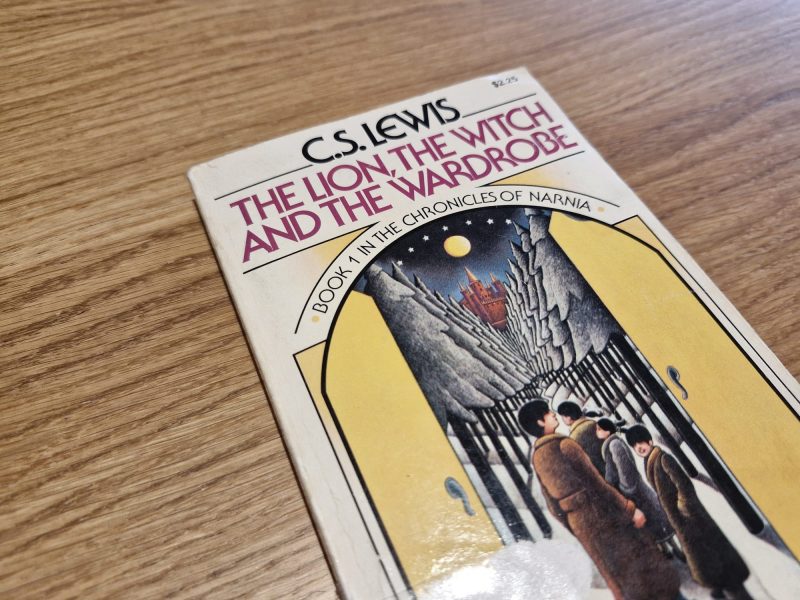
The four siblings who are the heroes of the books – Peter, Susan, Edmund, and Lucy – are sent far from the horrors of war and bombing to the countryside home of an eccentric professor. There, they accidentally enter a magical world by passing through a wardrobe.
Lewis, who had already written speculative fiction (though it wasn’t called that at the time), wrote this story not only because the subject sparked his imagination, but because he believed fantasy could be a guide for life. Through stories, complex and abstract ideas can be conveyed, even to children.
A sense of helplessness during chaotic events like war is one of the main causes of post-traumatic stress, and children experience it most acutely.
Psychological studies show that having a sense of control, even a partial one, as well as the ability to find meaning in what is happening, can build mental resilience. When there is no real control over reality, sometimes it is imagination that helps us cope. While it does not change the situation in reality, it can help create order and meaning.
This is exactly what C.S. Lewis sought to offer the children of the World War II generation. In the world he created, Narnia, children gain a greater sense of control over their reality. They are the heroes who choose goodness even when everything around them is dark, and they are the ones who change reality and save the kingdom of Narnia.
With sirens, shelters, and fear now a fairly routine part of life in Israel, children have gotten used to running to shelters to protect their physical selves. But how can we help protect their minds?
Sometimes, all it takes is a good story – one that gives strength, meaning, and a sense of control over the situation.
***
Based on a conversation with Dr. Ido Hevroni, chair of Lobel Core Curriculum at Shalem College.