
The small piece of paper was folded and unfolded again and again. Its creases somehow mirrored the emotional state of Avigail Uziel, a student at the “Ulpanat Segula” religious school for girls in Kiryat Motzkin, a town in northern Israel. It was the end of a Shabbat seminar, and around her surged a sea of adolescent chatter, laughter, and heartfelt conversations – girls on the cusp of adulthood, full of dreams and life. But she felt detached, unable to join in. A wall of pain seemed to separate her from all the excitement and joy.
Sitting alone on the grass in the dark, she opened the note – something handed out by a counselor earlier that day – and read the Hebrew words on its back over and over. Here is a translation of those verses:
If you will, O mortal,
Ascend, ascend on high.
For a mighty power is yours,
You have wings of spirit,
Wings of noble eagles.
Deny them not,
Lest they deny you.
Seek them,
And straightaway shall they be found.
The original Hebrew:
Im tir’tzeh, ben adam Aleh le-ma’alah, aleh
Ki ko’ach az lekha
Yesh lekha kanfei ruach
Kanfei nesharim abirim
Al tekha’sh bam
Pen yekhakhsu lekha
D’rosh otam
Ve-yimatze’u lekha miyad
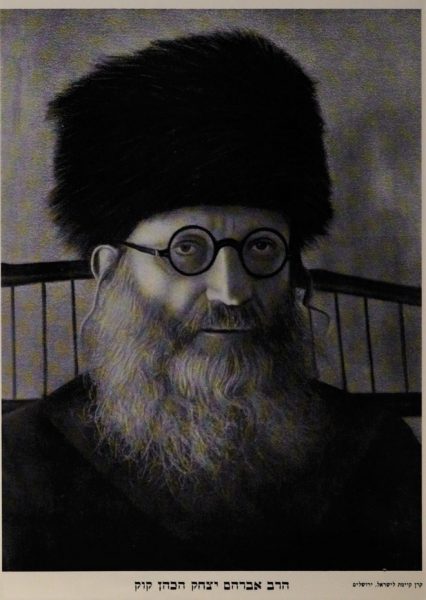
These words were written by Rabbi Abraham Isaac Kook and published posthumously by his student on the eve of World War II.
More than fifty years later, a teenage girl found strength in them. In the midst of personal turmoil, the words stirred within her – not just as poetry, but as melody. They lifted off the page and took shape in song.
Until that moment, Uziel’s musical experience was limited to basic guitar strumming. If anyone had told her she would compose a song, she likely would have laughed.
But there was something that night that called to her. The tune flowed out and began its journey. At first, she sang it – “Wings of Spirit” (Kanfei Ruach)- only to family and friends. They, in turn, shared it with others.

Requests soon came in: Can we get a recording? We heard it, were moved by it, and understand you composed it – may we use it?
Initially, Uziel didn’t bother registering the song or claiming rights. She didn’t even know how to write down the notes. The song lived orally, and passed among people by word of mouth.
When friends told her, “We heard someone playing it and they didn’t even say it was yours,” she reached out to the performers. She was flattered and glad people were singing it, but asked that credit be given for the melody.
The first time Uziel heard “Wings of Spirit” professionally performed was at a public sing-along gathering – a communal Kabbalat Shabbat on the banks of the Alexander Stream – sung by the powerful voice of Israeli artist Lea Shabat. Since then, she’s heard it countless times, interpreted skillfully or informally. One such performance would ultimately alter the song’s path.
In 2015, Rabbi Eliashiv Berlin – son of musician Musa Berlin and a teacher at the Merkaz HaRav yeshiva school, where two of his students were murdered in a terror attack seven years earlier – contacted Uziel.
Together with producer Ofir Sobol, they asked to record the song in a studio for the first time, to mark seven years since the tragedy.
As before, Uziel gave her blessing wholeheartedly. A new version of “Wings of Spirit” was recorded in the shadow of that immense loss, performed by Bini Landau and the Merkaz HaRav high school choir.
This time, the song truly took flight on wings of its own, spreading far and wide. At first, it circulated mainly within the religious and ultra-Orthodox communities, but soon it reached Jewish communities around the world. On sectoral radio stations, it was played again and again, and suddenly people around Uziel were humming “her” melody.
“To be honest,” Uziel told us in our interview, “more than hearing it on the radio, what really moved me were the messages and recordings people sent me – of the song playing at graduation ceremonies, in family videos made for grandparents, or at Jewish gatherings in all sorts of far-flung places around the world.”
Still, the broader Israeli public was largely unaware of the song. That changed, tragically, only with another national trauma.
Years passed. Israel suffered countless other tragedies. Uziel married, had children, and experienced her own hardships from time to time. And the song, she said, caught her anew each time – right before she might otherwise have fallen into despair.
Then life itself changed irreversibly on one terrible morning: the holiday of Simchat Torah.
On October 7, 2023, Yotam Haim was kidnapped from Kibbutz Kfar Aza. Along with him, 250 other Israeli civilians were abducted by Hamas terrorists. Just over two months later, Yotam was killed in Gaza by IDF fire after managing to escape his captors, in one of the most painful and complex incidents in Israel’s history, during one of its darkest periods.
Yotam was a bright, sensitive young man and a talented musician. That same year, he had been accepted to study percussion at the Rimon School of Music. The emotional struggles he had faced never stopped him from being full of love and dreams.

After his death, Yotam’s older brother Tuval – himself a gifted musician – was contacted by Israeli rock icon Berry Sakharof, who had seen a video of the Haim brothers performing one of his songs. Sakharof invited Tuval to join him on stage.
Meanwhile, Tuval had come across “Wings of Spirit” during one of the many memorial lectures their mother Iris delivered in honor of Yotam.
“The words hit me hard,” Tuval said. “At home we always said, ‘Yotam didn’t fall, he rose.’ How can we frame what happened as him ‘falling’? He was so brave. A fighter. He made it. He managed to get up and rescue himself, if only for a moment. He didn’t fall. He rose. That’s exactly what this song says.”

With a sense of cautious reverence, he approached Sakharof and proposed producing a new version of the song. “Berry’s response,” Tuval says, “was completely spontaneous. ‘Sure, let’s do it.’ That’s what he said.”
And so they did. They entered the studio, along with Haim’s band Pulkes, and recorded it. They sang. They cried. But they also laughed – because that’s what Yotam would have done if he were still alive. They adopted the song and made it Yotam’s.
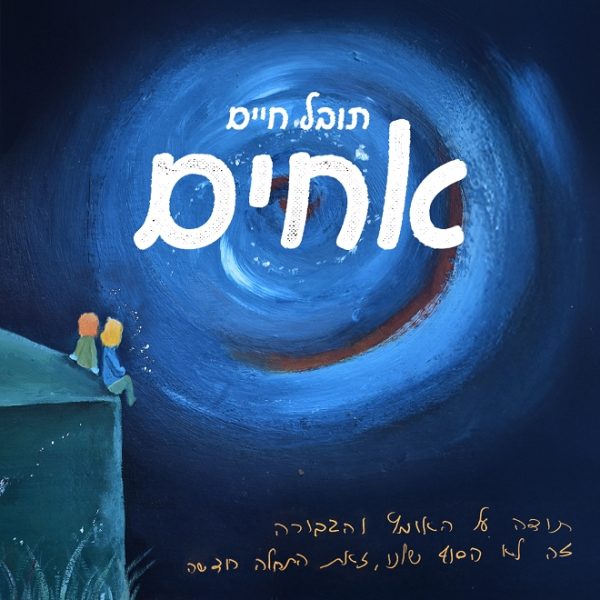
Later, the song was included on Tuval Haim’s debut album, dedicated entirely to his brother and his courage. Titled “Brothers,” the album’s cover art was created by their sister, Noya.
Avigail Amar Uziel once again gave her blessing for the use of the melody.
“It’s not about the tragedy or how he died,” she told us. “It’s about his life. His struggles. For me, yes, it was a song about mental health challenges. But even now, I don’t know if anyone else has ever seen it that way.”
“If the depressed girl I was at seventeen, carrying so much pain, had known that one day this song would be dedicated to someone like Yotam, who had his own struggles – it would have been the greatest, most accurate fulfillment of my dream.”
The power of this song, say both Uziel and Tuval, begins with the words. But the melody gave those words new life. Suddenly, nearly every Israeli knows a quote from Rabbi Kook. Uziel’s honest, beautiful tune carried those deeply human words into the world.
And now they belong to everyone. The new version may be dedicated to Yotam, but for Uziel – who doesn’t even see herself as a musician – it is dedicated to anyone who struggles. To anyone who finds themselves at a low point.
Ascend. Rise. That, she wants to tell them, is the power we hold as human beings.