

At a Father’s Day gathering last month at a Los Angeles-area restaurant, the chatter amongst Yasmeen Ohebsion’s family dealt almost entirely with Iran. The Israel Defense Forces the previous Friday morning had launched attacks on multiple sites in the country in an effort to destroy the anti-Israel regime’s facilities for producing nuclear weapons and ballistic missiles. The Israeli strikes would last 12 days until U.S. President Donald Trump declared a ceasefire. (The United States hit Iranian targets late in the campaign.) By that time, the IDF had neutralized much of Iran’s offensive capabilities. Iranian missiles had hit Tel Aviv, Haifa and Beer Sheva, killing 28 civilians. That was on top of Israel and Iran having attacked each another twice in 2024.
So, in the restaurant, the relatives continued their discussion of recent days, wondering whether the regime was wobbling and if the long-ago Iran they loved, when they and other Jews lived freely and Tehran and Jerusalem enjoyed diplomatic relations, could return.

But geopolitics didn’t overwhelm the personal this day.
Ohebsion’s grandmother phoned her lifelong friend, a Muslim, back in Tehran to ask how she was faring. At another point, Ohebsion turned to her father — who’d fled to the United States in the late 1970s during the revolution that overthrew Iran’s Shah, Mohammad Reza Pahlavi, and installed Muslim religious leaders — and asked what he desired as a Father’s Day gift.
“My dad broke down and said, ‘My wish is to take my family to visit Iran,’” said Ohebsion, the founder and chief executive officer of Our Campus United, a Jewish collegiate organization. “And now he thinks the wish can come true.”
Each of the two conversations constituted a “beautiful moment,” she said.
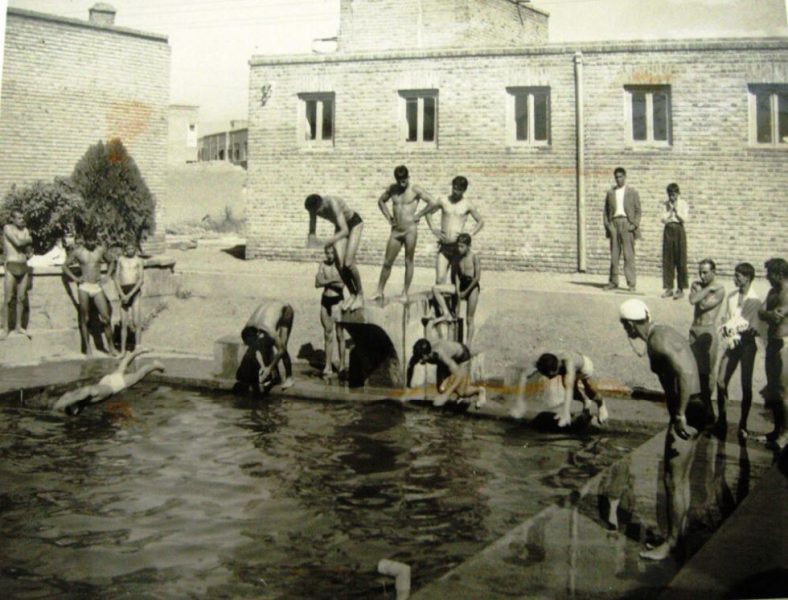
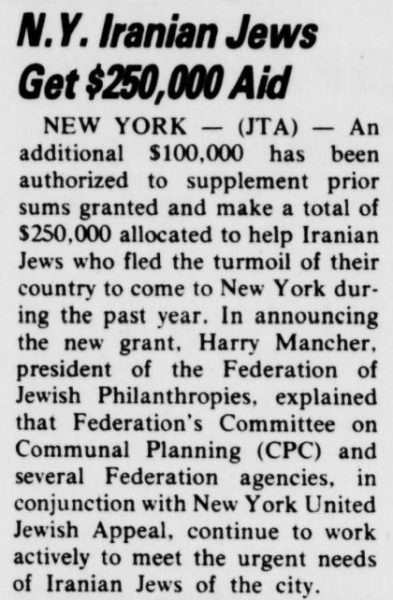
Approximately 80,000 Iranian Jewish immigrants and their descendants live in the United States, primarily in Los Angeles and New York City. Fewer than 10,000 Jews are estimated to remain in Iran, primarily in Tehran, Shiraz and Isfahan.
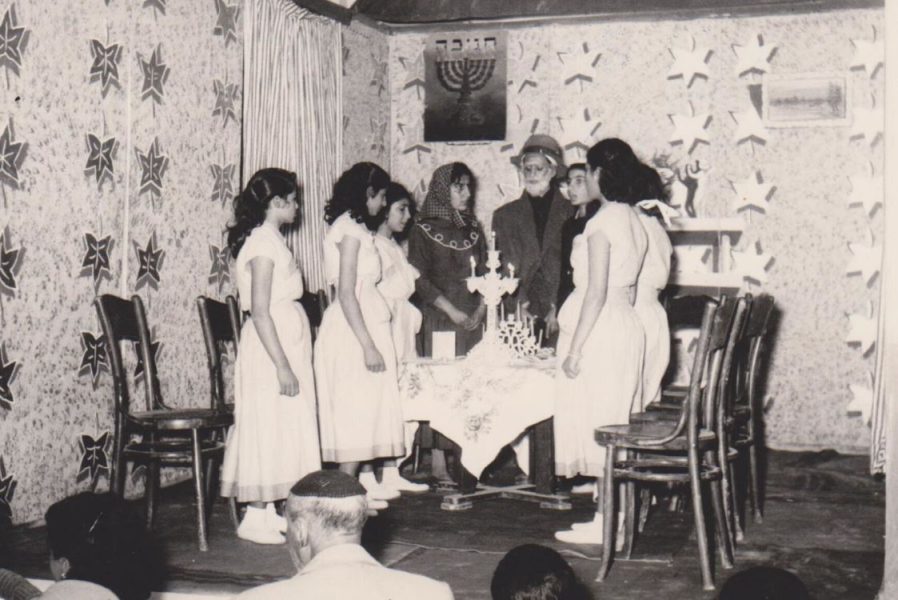
Wherever they live, Iranian Jews are known to extend mutual support, are committed to Jewish tradition and maintain strong familial bonds, several members of the American emigree’ community said. One man, who requested anonymity, said that Iranian-American Jews felt proud when Sharona Nazarian, who was born in Iran and as a child lived in Israel, was elected in April as mayor of Beverly Hills, a wealthy enclave of 31,000 people adjacent to Los Angeles. Nazarian’s election is an example of “an immigration success,” he said.
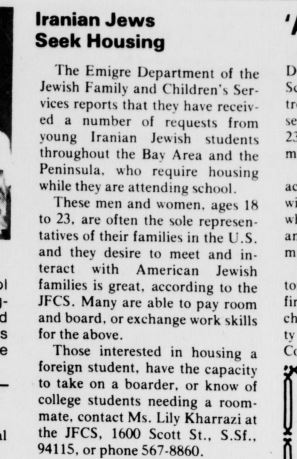
The vast majority of those who left Iran did so, like Nazarian’s parents and Ohebsion’s father, in fear for their future as Jews during the upheaval of the late 1970s that ushered in a now-46-year period of Islamic fundamentalist rule.

That concern resurfaced in late June following the arrests of hundreds of Jews and other citizens whom the regime charged with supporting and even aiding the Israeli attacks.
Most Jewish and non-Jewish Iranian-American expatriates interviewed for this article requested anonymity out of concern that the regime could exact revenge against their loved ones back home.
Nearly all of the Jewish and non-Jewish interviewees expressed support for Israel’s strikes against Iran, especially for its targeting of the regime rather than average civilians. They said they hope the attacks weaken the regime and embolden Iranian citizens to topple it.
“Iranian people are not happy that our homeland is being bombed, but, rather, that the killers of our children are. They’re upset about the ceasefire,” said a U.S.-born foreign affairs analyst whose parents fled Iran in the late 1970s. “There’s a very small percentage that saw Israel or America as the enemy. Most saw Israel as the Messiah.”
Those interviewed related difficulties in reaching friends and relatives during the crisis, due, apparently, to the regime’s periodically cutting Internet and cellular phone service. Some said they telephoned those with land lines to ask that they check on the callers’ loved ones.
Two non-Jewish Iranian-American expatriates and their Jewish-American friends reported asking about each other’s loved ones living in Israel and Iran.
“Neil and I could connect because we know that the other person would understand,” a non-Jewish Iranian expatriate, who requested to be identified by only her first name, Shiva, said of a Jewish-American she knows in their industry who is not of Iranian descent and whose daughter and sister live near Tel Aviv. “I would say, ‘I’m sorry about what’s happening.’ I’m following the news in Iran, and he’s following the news in Israel. Knowing what’s going on there is another piece of information about the same war.”
“On the surface, they have some freedom, but they’re afraid — and after the 12-days’ war, it’s gotten worse,” Elham Yaghoubian, a Jewish Iranian who moved to Los Angeles in 1999, said of Jewish friends in Iran with whom she’s been in contact. “People have gotten arrested for talking to relatives in Israel since the war started. We hope they’ll be released soon.”
Another Iranian emigree, Rozita Ghiasi, had returned to Baltimore shortly before the Iran-Israel war broke out. She’d spent six weeks in Tehran, surprising her brother and other relatives there. The visit revived the warm feelings Ghiasi, a Muslim who’s lived in the United States for 38 years, holds for aspects of her homeland: intra-family closeness, the hospitality people extend even to strangers, the herbs and the sweets.
“I feel like the best of me just came out” while back in Iran, she said. “The people of Iran don’t judge you based on your color, your religion. They don’t.”
During the visit, Ghiasi’s brother sensed that war was imminent and questioned her timing. “I took a chance and went. I had such a wonderful time,” she said.
“Let’s just hope for peace for both sides. Seeing people in Israel suffer breaks my heart. Seeing people in Iran suffer breaks my heart.”
Writer-editor Hillel Kuttler can be reached at [email protected].