
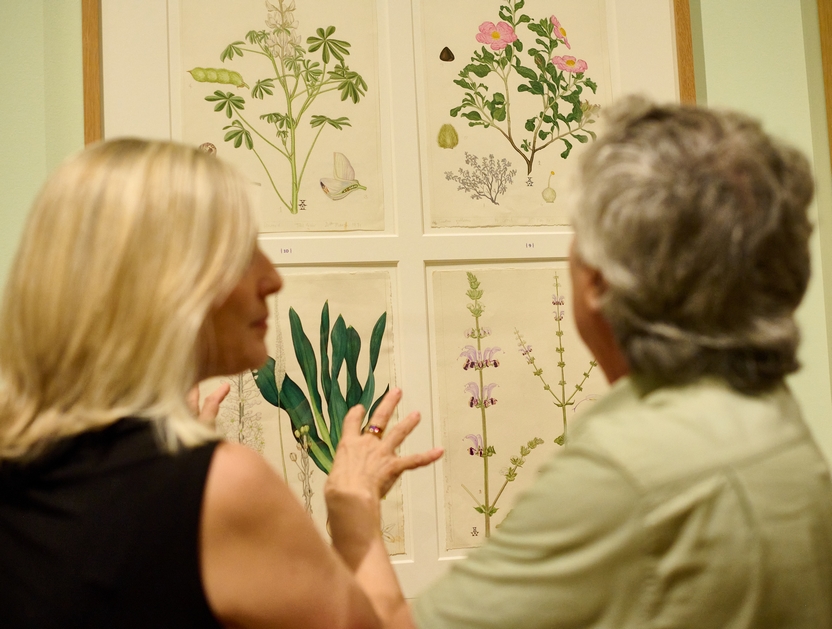
In the 1960s, Israel’s wildflowers faced a grave threat. Members of the Knesset, nature lovers, and environmental officials led by Uzi Paz and Avraham Yoffe, director of the Nature and Parks Authority, warned that if nothing was done, the country’s wildflowers would soon vanish and future generations would never know the natural beauty of the land.
Their answer was the “Don’t Pick Wild Flowers!” campaign, which sought to revolutionize the relationship between Israelis and nature.
The Flower: Nature’s Work of Art
To launch the campaign, they needed images, botanical illustrations that would accompany posters and create an emotional connection between the public and the flowers. Here, the Nature and Parks Authority took a revolutionary approach for its time. They decided to think big. They raised funds and contacted none other than Mary Grierson and Heather Wood, the official botanical illustrators of the Royal Botanic Gardens, Kew, in London.
Grierson, already well known in her field, felt that at her advanced age, the journey to a small country in the Middle East was too demanding. She therefore sent her assistant, Heather Wood, to explore Israel’s landscapes. For four months, Wood toured the country, guided by Nature and Parks Authority staff who introduced her to rare and beautiful Israeli wildflowers. During her stay, Wood even fell in love with a local man and planned to remain in the country for a time, but the romance ended in heartbreak. Yet from that bittersweet journey came a lasting gift: 400 exquisite botanical paintings, among the most beautiful ever created of the flora of the Land of Israel.
A Bouquet for the Lady
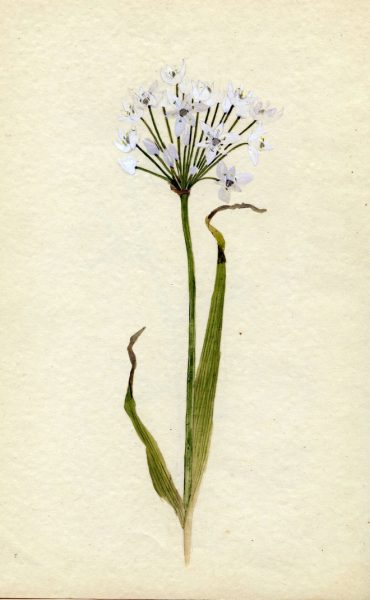
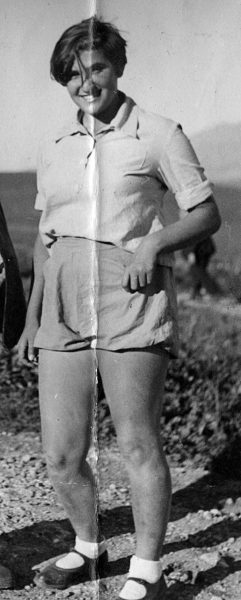
Wood’s paintings joined those of another artist, Israeli botanical illustrator Bracha Avigad. In pre-state Israel, art education was a luxury few could afford. But in 1935, when Hadassah founder Henrietta Szold visited a group of young Hebrew pioneers in Tel Hai, Avigad presented her with a flower painting inspired by the Galilee landscape. Szold was so impressed by the young woman’s talent that she arranged for her to receive an art scholarship to study at the Bezalel Academy in Jerusalem.
Years later, Avigad illustrated wildflowers for an early 1960s project to save the flora of the Mount Carmel region in Israel’s north. When the “Don’t Pick the Wild Flowers!” campaign began, she chose not to take part for personal reasons, but generously granted permission for her drawings to be used in the project.
Flowers in the Clinic, the Classroom, and the Attic
The campaign to protect Israel’s flora was an instant success. Radio ads, posters, and signs flooded the public space. The average Israeli encountered them daily, at the bank, in health clinics, and in school hallways. Above all, it was the vivid flower illustrations that captured hearts and inspired affection and a desire to protect them.
The campaign’s success was so great that the images soon spread beyond posters. They appeared on textbooks, porcelain, and even matchboxes, becoming cultural icons. For hundreds of thousands of Israelis, these flowers became part of the visual memory of childhood.
Thanks to the enthusiastic response, Israel’s wildflowers were saved. The path to the public’s heart was paved by the remarkable illustrations of Avigad, Grierson, and Wood. Within just a few years, the once-common custom of picking wildflowers nearly vanished from Israeli life.

A Winter Slumber
In the years following the campaign, various attempts were made to recreate its success, but none matched its magic. Over time, the original illustrations by Heather Wood disappeared altogether.
The rare and delicate works, created by the master botanical artists of Kew Gardens, were lost and largely passed out of public memory. The campaign’s triumph had faded, generations had passed, and the fragile blossoms had slipped quietly into winter sleep.
But some things are never truly forgotten.
During a move of the Nature and Parks Authority’s offices, one employee wandered through the vast storage rooms and discovered a small envelope tucked behind a shelf. Inside was a treasure: the original paintings by Heather Wood and Mary Grierson, the very works that had forever changed Israel’s landscapes. The illustrations were carefully restored, their colors as bright and alive as ever. Still, the question remained, how could they be shared again with the public, especially with those for whom these flowers had been an essential part of their childhood? The answer came from an unexpected place, the National Library of Israel.
A New Bloom
“Most of the Library’s exhibitions are drawn from our own collections,” says Karine Shabtai, associate curator of exhibitions at the National Library of Israel. “Our goal is not only to show what’s stored in the Library’s vaults but to tell stories in new ways, through surprising connections.”
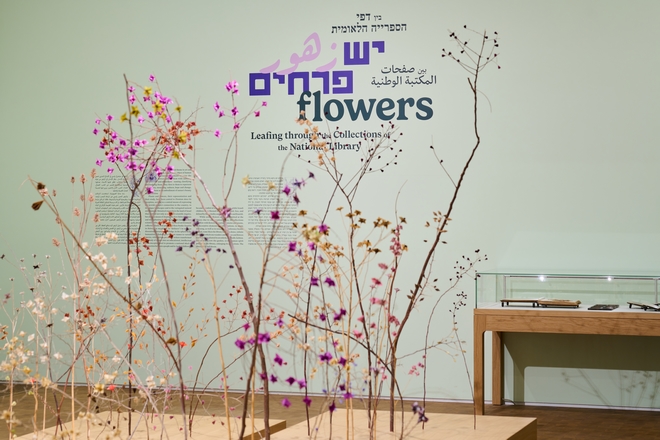
That connection was found by curators Neta Assaf and Karine Shabtai, who conceived the idea of an exhibition about flowers. Even with war still underway at the time, the decision was made to focus on flowers and the beauty of nature, the small and transient things that make life precious. To bring their vision to life, they explored the Library’s storerooms, searching for rare items unseen elsewhere, for stories that only the National Library, with its depth and diversity, could tell.
The Library holds an extensive poster collection, but the curators wanted to bring the public back to the moment when Israel’s awareness of nature preservation first took root. This led to a joyful collaboration between the Israel Nature and Parks Authority and the National Library. Sixteen of Heather Wood’s 400 paintings, preserved in the Authority’s archives, were loaned to the exhibition Flowers, which opened in August, 2025. Alongside the iconic posters that shaped the visual landscape of generations, visitors can now see the original paintings themselves.
“This is a truly significant poster,” says Assaf, “a moment of transformation in how the people of this land relate to its nature and its scenery.”
For more information and tickets for an in-depth tour of the exhibition Flowers: Leafing Through the Collections of the National Library, click here.