
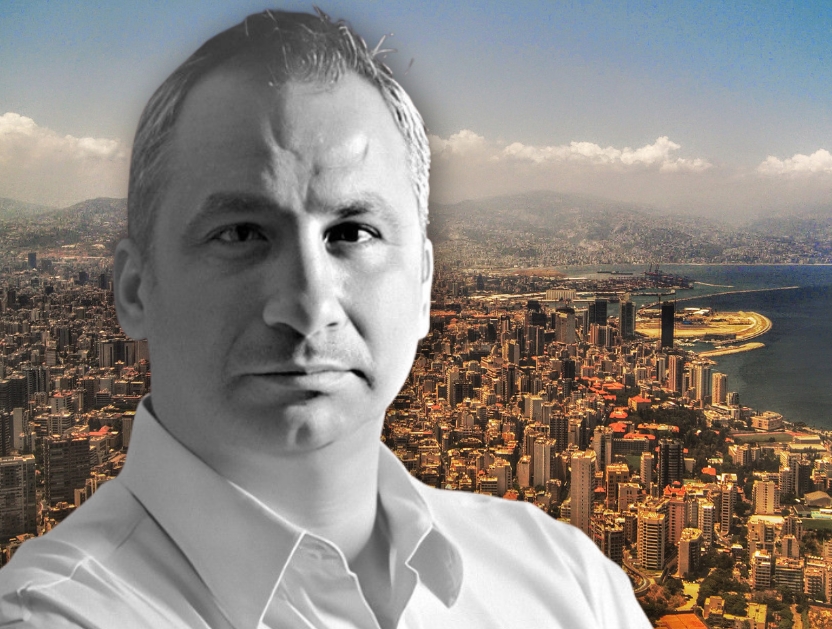
“I last saw my father in March, ’85.
It was a coordinated effort – twelve Lebanese Jews were abducted. My father was not the only one.
After several months, the organization [Hezbollah] decided to execute all of the hostages, beginning with my father, may his memory be a blessing, after being held in captivity for nine months, in December of ’85.”
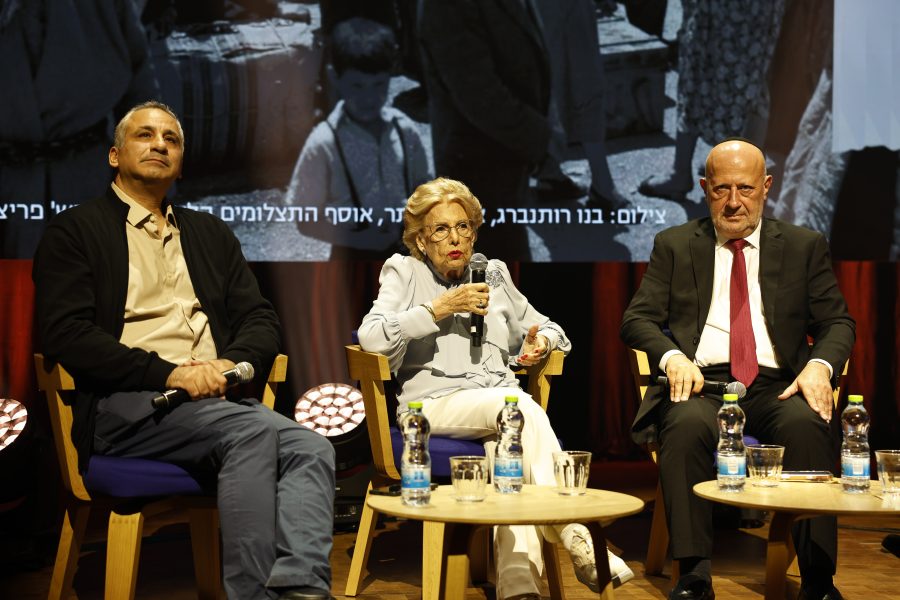
Edy Cohen, born in Beirut, Lebanon, in 1972, is one of the “witnesses” who recently took part in a special event at the National Library of Israel, held on November 30, under the title – “The Other Refugees”.
That November 30 date is now officially set aside as the “Day to Mark the Departure and Expulsion of Jews from the Arab Countries and Iran”. Yet on this occasion, it also marked the official reception of the Sephardi Voices Collection at the National Library of Israel – a remarkable and truly unique database of video testimonies provided by Jews who were able to recall their experiences from their time living in Arab countries. For the most part, these recollections date back decades, often to the immediate aftermath of the establishment of the State of Israel, when hundreds of thousands of Jews were expelled from across the Muslim world.
Edy is one of those who contributed video testimony. He is among the youngest, born well after Israel won its independence. Indeed, his case is somewhat different, because the mass departure of Lebanese Jews happened much later than in other countries. The quotes which appear here are taken from his testimony.

“I was born with the name Edward Cohen Halala. Our family’s origins were most likely in Spain, and we were expelled from there. We are the fourth generation in Lebanon. My siblings and I attended a Christian school. We preferred a Christian school, it was more moderate and less extreme. It was called Collège de la Sagesse – ‘The School of Wisdom’… I must say that I never heard anything antisemitic from the teachers or the school administration.”


But things were changing in Lebanon, and the societal fabric was quickly coming apart – a process that began when Edy was still only three years old.

“The civil war broke out in ’75 and ended only in ’91. That means I experienced the war from age three until age nineteen, so I remember it very well – like every other Lebanese person… First of all, there were the noises, the bombings, the shelling, the shelters.”
“My mother always wished, asked, and demanded from my father that we go, that we immigrate. Thousands, hundreds of thousands of Lebanese left Lebanon, Christians and Muslims, some to Canada, some to the United States. We had many opportunities to come to Israel, to travel to the United States, to Canada. We even had visas for Canada. I vaguely recall that France was also an option, but my father, may his memory be a blessing, did not want to leave.
Because my father believed in coexistence.”
In the end, it was the abduction and murder of his father in 1985 that led Edy’s family to finally leave Lebanon, first for France, before eventually making their way to Israel.

As Edy explained during the November 30 event at the National Library, that terrible episode in the mid-1980s largely marked the end of the Jewish presence in Lebanon, which had stretched all the way back to antiquity. In 1948, there were estimated to be some 20,000 Jews living in the country. In 2020 they numbered 29. The situation is similar across many countries in the Middle East.
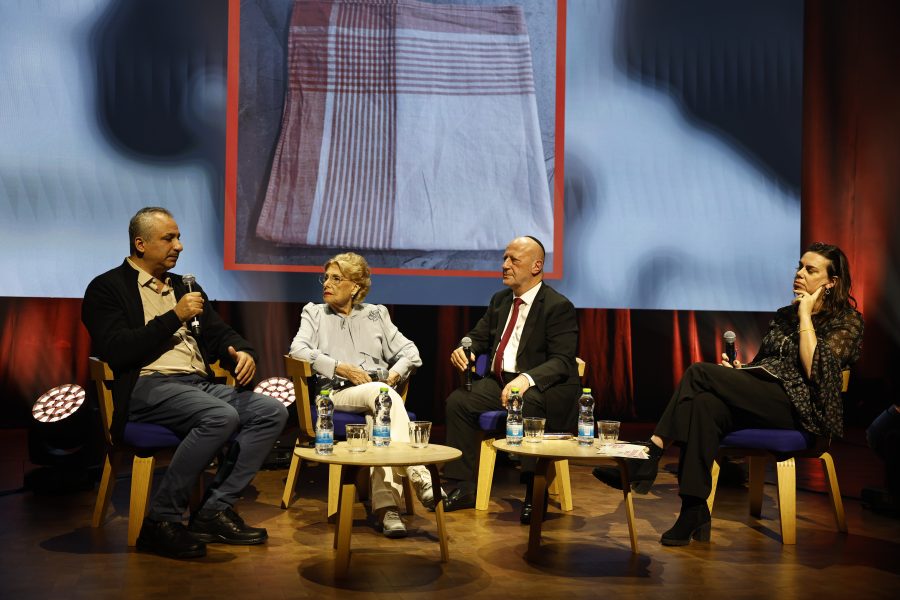
That evening, Edy also shared an image of a handkerchief which was used to the cover his father’s eyes during his time in captivity. Edy sat onstage alongside two other “witnesses” who recalled memories from their childhood and youth – 87-year-old Levana Zamir who grew up in Cairo, Egypt, and 70-year-old Edwin Shuker, who spoke of his years in Baghdad, Iraq. Their video testimonies are also part of the Sephardi Voices Collection.
Today Edy is a researcher and journalist. He is also a commentator on Arabic social media with over 900,000 followers on X (formerly known as Twitter).
“Even though I have Israeli citizenship, I feel like a refugee, because I was born in a country and forced to leave out of fear for my life. I am Israeli, but I have another identity.”
You can watch the rest of Edy’s video testimony here (an English transcript is available). The testimony is part of the Sephardi Voices Collection, now housed at the National Library of Israel.
View hundreds of other video testimonies by Jews from Arab countries in the Sephardi Voices Collection, here.